What is miliary dermatitis?
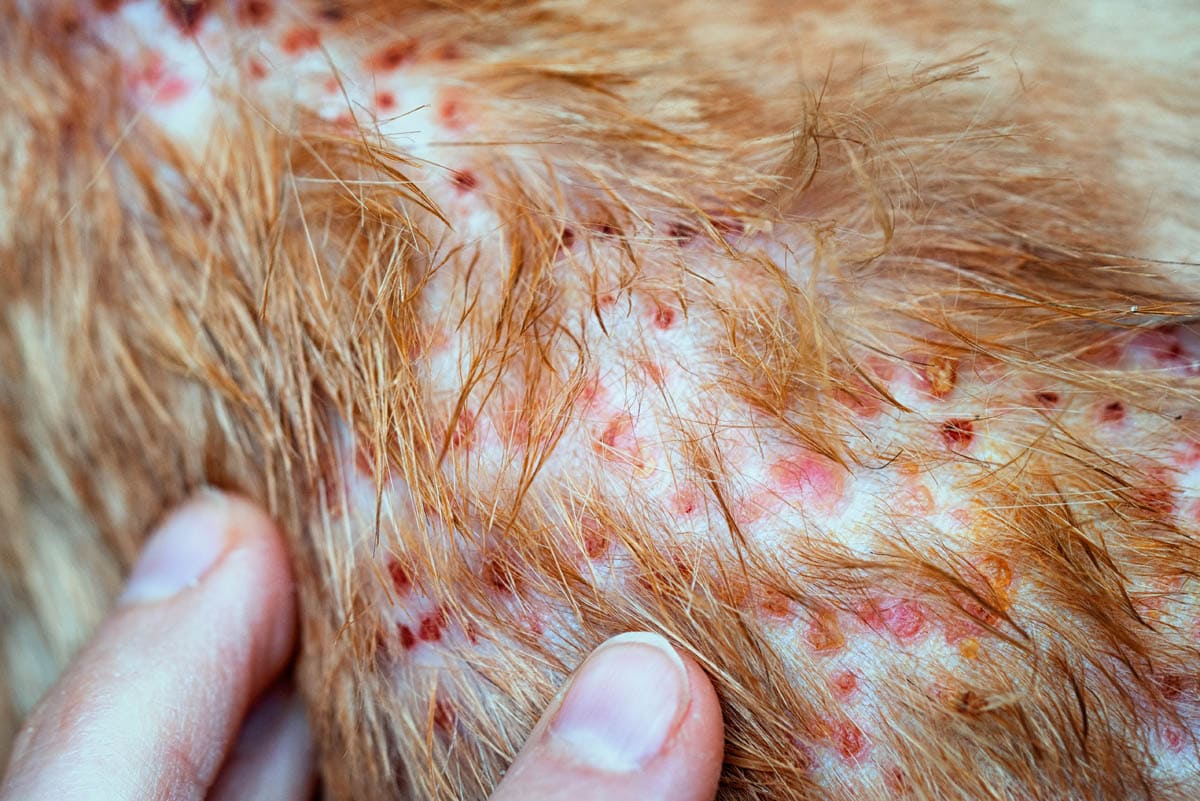
Also called miliary eczema, papulocrusting dermatitis or scabby cat disease, miliary dermatitis is a collection of crusty skin lesions or scabs around the head, neck and back along with intense itching. It isn’t a specific disease but a disease complex. The term miliary refers to the millet-like papules on the skin which feels similar to millet seeds.
Miliary dermatitis scabs on cats – what does it look like?
Miliary dermatitis in cats is a skin condition characterized by small, crusty, and itchy bumps and scabs. The name “miliary” comes from the Latin word “miliarius,” which means “related to millet.” The skin lesions in cats with miliary dermatitis are often likened to millet seeds in appearance.
- Small Crusted Papules are common lesions. They are small, raised scabs that are crusty to the touch.
- Itchiness: the affected areas are usually very itchy, which may lead to excessive scratching or grooming by the cat. You will usually see red, crusty bumps and scabs, especially around the head, ears, neck, and back (dorsal), often with intense itching.
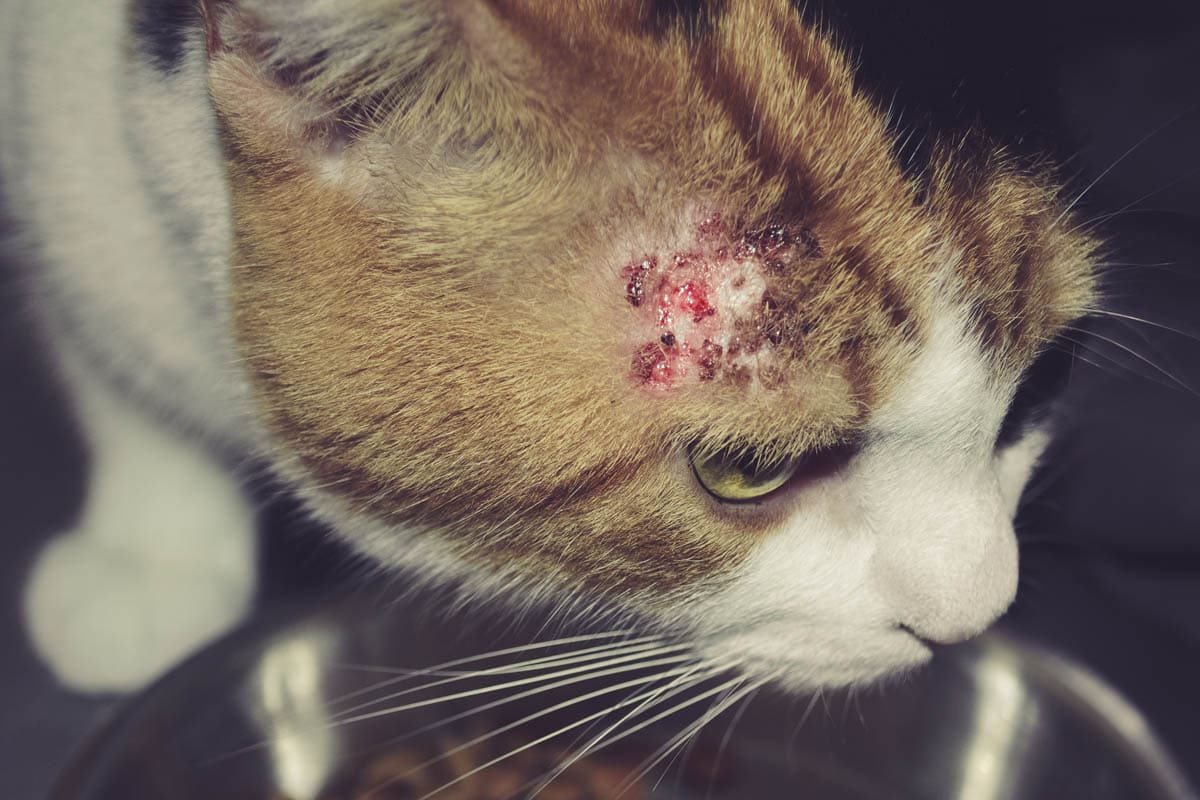
- As the head and neck areas are within reach of the claws, scratching can lead to self-trauma, resulting in large and often open scabs (excoriations).
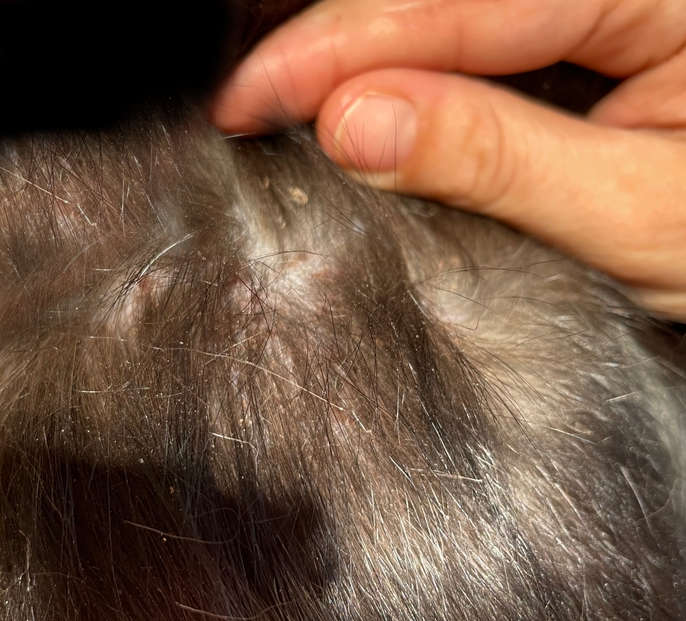
- Hair thinning or loss around the affected area.
- Scratching, licking and biting the affected area.
Causes
The three most common causes of miliary dermatitis are flea bite hypersensitivity, allergies and ringworm.
- Flea bite hypersensitivity – Up to 80% of cats with miliary dermatitis have flea bite hypersensitivity. Even if you don’t see any fleas or your cat is strictly indoors, it is still possible he has fleas. Just one flea is enough to cause an allergic reaction in a sensitive cat.
- Allergies – Inhalant (such as dust or pollen), food, contact, and insect (such as mosquitoes).
- Ringworm – A common fungal infection on the skin which causes circular lesions. There is a higher incidence of ringworm in kittens and Persian cats.
- Bacterial infections or overgrowth.
- Yeast infections or overgrowth.
- Mites including cheyletiellosis, ear mites, notoedric mange and demodicosis.
- Immune-mediated diseases such as eosinophilic granuloma complex, systemic lupus erythematosus or pemphigus.
- Drug reaction.
- Certain tumours.
- Biotin and fatty acid insufficiency.
Diagnosis
The veterinarian will perform a physical examination of your cat and obtain a medical history from you including the following:
- Are the symptoms seasonal?
- Does the cat have any concurrent diseases?
- What food he is eating?
- Is the cat on any medications or treatments?
- Is the cat indoors/outdoors?
- Does the cat receive regular flea treatment?
Diagnostic workup:
If there is no improvement he may decide to run the following tests:
- Baseline tests: Biochemical profile, complete blood count, and urinalysis to evaluate the overall health of your cat and look for underlying medical conditions.
- Analysis of coat brushings and fur samples: To check for parasitic infections such as mites, fleas or fungal infections.
- Skin prick test: An area of skin is shaved and a tiny amount of common allergens are pricked onto the skin to see if there is a local reaction. This can pinpoint an allergy to a particular substance.
- DTM (dermatophyte) culture: Hair is plucked from the affected area or a toothbrush will be used to collect samples which are then cultured on a special medium to check for fungal or yeast infections.
- Fecal flotation: A small sample of feces is added to a solution and is then spun and strained to look for the presence of worm eggs.
- IgE test: A test of the clear portion of the blood for IgE antibodies to a particular substance.
- Skin scrapings: Scrapings of several layers of skin are evaluated under a microscope to look for the presence of mites, fungal infections, and bacterial infections.
- Skin culture: A sample of skin is taken from the affected area and added to a culture that promotes the growth of microorganisms that can identify a bacterial infection.
- Food trials: The cat is switched to a novel source of food (such as kangaroo or lamb) for several weeks, excluding all other foods, including treats. If miliary dermatitis improves, the cat will then resumes his usual diet to see if the miliary dermatitis returns.
Treatment
Treatment of feline miliary dermatitis depends on the cause of the problem.
- Diligent flea control on both the cat and in the environment.
- Dips, medicated shampoos, topical treatments and oral medications to treat mites, mange, fungal and yeast infections.
- Anti-parasitic medications to kill intestinal parasites.
- Hypoallergenic diet for cats with food allergies. Some cats can go on to develop an allergy to the new diet.
- Avoidance (where possible) if other non-food related allergies are the cause.
- Antibiotics for secondary skin infections, if required.
In addition to the above treatments, fatty acids, shampoos, antihistamines, and corticosteroids can relieve itching and inflammation.
Author
-
by
-