At some point, you may be faced with the prospect of caring for an orphaned kitten, which may be a result of a queen (mother cat) having more kittens than she can care for, having passed away, rejecting the kittens or you may find a motherless kitten.
What should you do if you find an orphaned or feral kitten? First, get the kitten indoors to a warm, safe place.
Regulating their body temperature
Depending on the situation, you may have to warm up or cool down the kitten. Kittens are not great at regulating their body temperature so you must help with this.
Make sure the temperature is warm but not too hot to burn the kitten. Kittens can’t shiver for the first two weeks of their life, so it is hard to gauge if they are too cold. It is vital to keep the kitten warm and near you as much as possible. Holding the kitten close to your body will not only warm her, but she will also be comforted by your heartbeat.
If your kitten is overheated, remove the kitten from the heat and slowly decrease the temperature. Gently wipe the kitten’s body with a cool, damp (but not wet) cloth.
Supplies
- Bottles
- Nipples/teats (in an emergency, a 3cc syringe with the needle removed can be used to give the kitten milk)
- Bottle cleaning brush
- Kitten formula
- Nesting box
- Heat pad
- Old clean towels
- Shallow food dish or teacup saucer (for when they start solids)
- Microfleece baby blankets
- Cat litter (avoid clumping litter with kittens as they may eat or inhale it, recycled paper or corn cat litters are safest)
- Fragrance-free wipes for cleaning up your kitten after a meal, toileting
Optional
- Soft toy for your kitten to snuggle up to, there is a product available called Snuggle Kitty which has a heartbeat to comfort an orphaned kitten
Giving an orphaned kitten milk

The best milk for a kitten is his own mother’s milk. However, if the mother is unable to nurse the kitten, a foster mother is the second-best choice. If there is a foster mother available, her kittens should be no more than 14 days older than the orphaned kitten. A foster mother isn’t always possible, so you will have to hand-raise the kitten using an artificial formula designed especially for use on kittens. This, along with bottles and droppers for feeding, can usually be found in the cat food aisle of most supermarkets or pet stores. If you can’t find any, a veterinarian can usually provide you with a formula for kittens.
Bottle-feeding basics
Wash your hands and sterilise all feeding equipment. Young kittens – especially orphaned ones who don’t have the benefit of antibodies transferred from the mother’s colostrum to the kitten – are particularly vulnerable to infection so care must be taken when preparing formula. Carefully follow directions on the box of formula or directions provided by your vet to determine the proper temperature and amount to feed your kitten. You will need to know your kitten’s approximate age and weight to give the right amount of formula. Giving too much or too little formula can kill the kitten. For this reason, it also very important that you make the right size hole in the nipple of the feeding bottle. If you can squeeze a small drop from the upturned bottle, you have made the right sized hole.
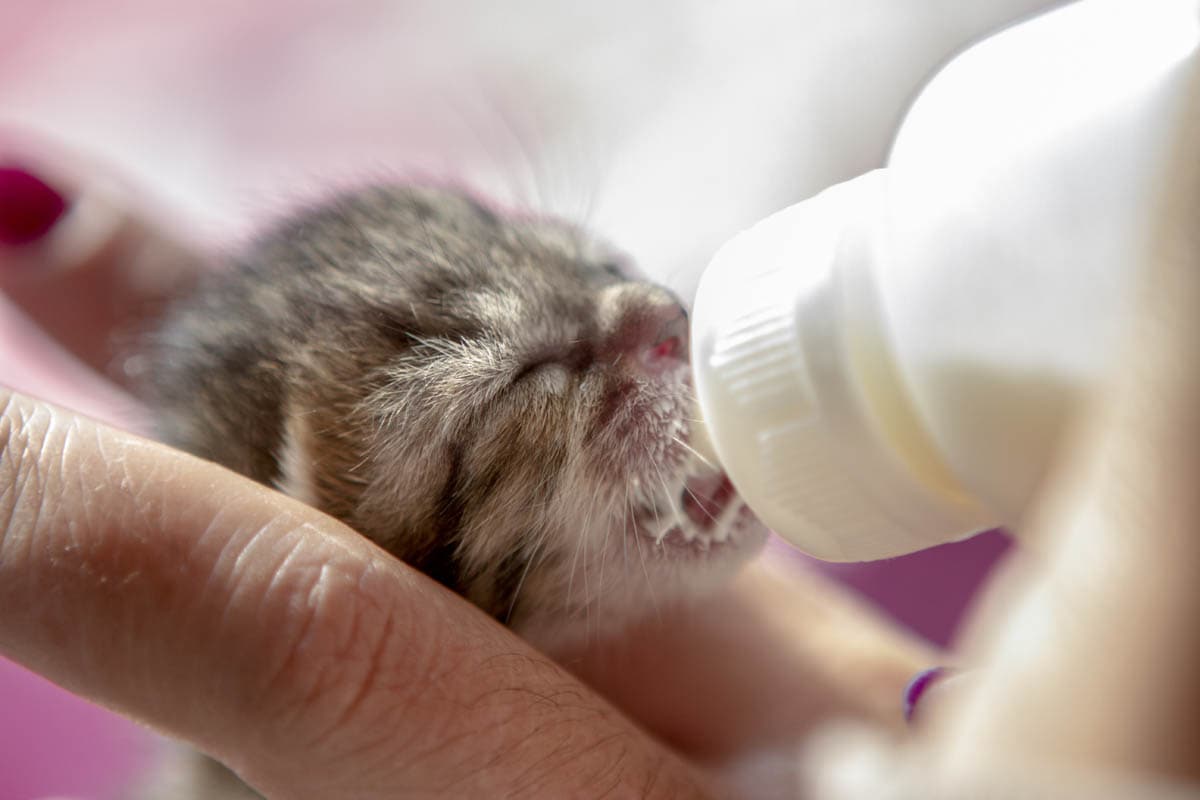
Milk should be at body temperature (around 38C), check the milk isn’t too hot or cold by squeezing a drop or two onto your wrist. Gently place the kitten on his stomach, open the mouth with a finger and slip the nipple in. To encourage suckling, gently stroke the kitten’s throat in a downward motion. Hold the bottle at a 45% angle. Feeds should be every 2 – 3 hours, around the clock.
After feeding your kitten formula, you may need to burp him. To do this, hold the kitten upright against your shoulder and gently pat him on the back.
Caution
- When formula feeding, be careful to ensure the formula doesn’t get inhaled by the kitten. Don’t squeeze the bottle; this will force too much milk into the kitten’s mouth, possibly causing choking or aspiration.
- The kitten should have his belly facing down (as you can see in the two images above), feeding him on his back (as you would a human baby) poses the risk of the formula being inhaled, which can lead to lung infection or drowning.
- Do not re-use leftover milk.
- Do not use cow’s milk.
Emergency milk replacement
If you don’t have any milk on hand, you will need to make up some emergency milk.
- 100 ml evaporated milk
- 100 ml of water
- 3 egg yolks
- 100 ml plain yoghurt (full fat)
- 2 tablespoons honey or Karo syrup
Mix ingredients and warm before feeding.
Dehydration in kittens
Dehydration is very serious and can lead to death if left untreated. Unfortunately, kittens dehydrate rapidly due to their small size.
Signs of dehydration include sunken eyes, loss of skin elasticity, lethargy, dry gums. To check for dehydration at home, gently grasp the skin between the cat’s shoulders and raise it. It should spring back immediately if this doesn’t happen it may be a sign your kitten is dehydrated if you do suspect the kitten is dehydrated seek veterinary attention urgently.
Bedding for young kittens
Cardboard boxes are insulating and therefore a good place to make a bed for your kitten. Place a towel in the bottom of the box along with a hot water bottle or a heating pad. The heating pad/hot water bottle should only cover half the area, so if the kitten gets too hot, he can move away from the heat.
Ensure that the bedding doesn’t have strings and threads which may entangle the kitten. Bedding will need to be changed regularly, to maintain proper hygiene. Ensure the box is in a quiet, draft-free spot. Kittens are unable to regulate their body temperature for the first week or two, so the kitten must have a source of warmth. Hot water bottles or heat lamps can be used to keep the kitten warm, but it is important to keep a regular check of the temperature to ensure it’s not too hot or cold for the kitten. Newborns require a temperature of 89-93F (around 30C).
Toileting
A young kitten cannot urinate or defecate on his own until he is three to four weeks of age. The mother cat licks the kitten’s belly and bottom to stimulate elimination. You will have to provide this stimulation for your kitten by gently rubbing these areas with a warm, damp washcloth. It is usually recommended this be done both before and after the kitten has eaten.
Once the kitten hits three weeks old, you can introduce him to a litter tray. At this age, they are still tiny, an old box, with one side, cut out, is ideal, place some plastic sheeting or old newspaper at the bottom of the box and then add the cat litter. Initially, you will need to show the kitten what to do. After he has had his bottle, carefully place him in the litter tray.
The litter tray should be away from his bed as cats by nature don’t like to go to the toilet near where they sleep or eat. However, the litter tray shouldn’t be a long way away, either. Keep the area free of clutter so that the litter tray is the only place your kitten can go to the toilet. When toilet training, it is generally a good idea to keep the kitten confined to one room.
Make sure the litter tray is kept clean at all times.
Weaning kittens
The weaning process starts from 4-5 weeks of age. Begin slowly by mixing baby food (check the ingredients to make sure the food contains no onion as this is toxic to cats) canned or dry cat food in with some kitten formula. Not all kittens will take to food immediately, so patience is important. Introduce a small amount initially by placing a small amount of food on your finger or in a cat bowl. As the kitten eats more solid food, gradually decrease the amount of formula, he has.
At this stage, you can provide them with a saucer of water, please only use a shallow dish so the kittens can’t fall in and possibly drown. Change water at least once a day.
Parasites
It is important to ensure the orphaned kitten is parasite free. Fleas and worms can cause anaemia, which can lead to death. Remove fleas using a flea comb. Seek veterinary advice on products that can be used on very young kittens to treat both fleas and intestinal worms.
Please only use products suitable to be used on kittens, never use products for dogs on cats and don’t use essential oils such as tea tree, which are toxic to cats.
Weighing and record-keeping
It is important to keep a log of your kitten’s weight to ensure it is gaining weight. Kittens should double their birth weight in the first 7 – 10 days. Keep a log of when feeds were made, how much was given etc.
Love and attention
Your kitten will need plenty of love and attention. When he’s not sleeping, ensure you give it lots of physical contact.
What to watch out for
When a kitten is sick, he can go downhill very, very fast. If you notice any of the following, please seek veterinary care immediately.
- A kitten who isn’t eating
- Not gaining weight (or enough weight)
- Vomiting
- Diarrhea
- Pale gums
- Eye or nasal discharge
- Lethargy
- Skin problems
Kitten milestones
Birth:
- Kittens born blind (with eyes closed) and deaf (ears are folded down).
Day 3:
- Umbilical cord falls off.
Week 2:
- Eyes are beginning to open.
Week 3:
- Kittens are becoming more aware of their environment; some may start to tentatively walk.
- You can start litter training now, but it may be some time before they are properly toilet trained.
- Baby teeth starting to come through.
- Ears are now erect.
Week 4:
- Eyesight and hearing improving.
- The kitten can now start to drink water, but he will still need to have milk also.
Week 5:
- Eyesight is fully developed.
- Weaning onto solids can begin.
Week 6:
- Kittens are now extremely active.
- They can receive their first vaccination from 6-8 weeks. All kittens should receive a series of THREE core vaccinations.
Author
-
by
-