AboutWhat is feline acne? Feline acne is a skin disorder affecting the chin of cats where hair follicles clog with oil and dead skin cells, to form blackheads. Causes:
Symptoms: Can range from mild to severe and include comedones (blackheads), erythema (redness), oedema (swelling), pustules (pus-filled bumps), folliculitis (inflammation of the hair follicle) and furunculosis (deep infection of the hair follicle). Diagnosis: A thorough physical examination along with presenting symptoms, skin cytology and culture to rule out other Treatment: Medications to clean the area, reduce bacteria and unplug the hair follicle, changing food bowls, manage underlying cause, if one is found. |
What is feline acne?
Acne is a common skin disorder in cats that is characterised by blackheads (comedones) and inflammation on the chin and lips. It typically occurs in adult cats, with a median age of onset of four, and has no sex or breed predilections.
Sebaceous glands are small oil-producing glands located in the skin all over the body. Connected to the hair follicles, sebaceous glands produce sebum, an oily substance composed of triglycerides, phospholipids, and cholesterol.
What does sebum do?
- Sebum lubricates the skin and hair
- Acts as a chemical barrier against pathogens
- Reduces water loss from the skin
A collection of larger sebaceous glands are located on the eyelids, lips and chin and base of the tail. Sebaceous glands are involved in territorial marking, and any observant cat owner will have seen their cat rubbing his face and chin (known as head bunting) or back and tail on their favourite people or objects, over time this rubbing can leave dark greasy patches.
The hair follicles of cats with acne become clogged with sebum or keratin due to over-production of keratin, a protein in the outer layer of the skin), exposure to oxygen causes this build-up to turn a brown/black colour, hence the name blackheads (or comedones). Over time, the follicle becomes inflamed, irritated and infected.
Causes
The exact pathogenesis is not known, but several factors have been proposed, in some cases, multiple factors may be at play.
Stress: When a cat is stressed, adrenaline and cortisol are released, which in turn trigger the sebaceous glands to produce more sebum and also inhibits the immune system so bacteria can grow unchecked in the excess sebum.
Plastic food bowls: This type of food bowl is discouraged, particularly for cats with feline acne. Plastic bowls are porous and over time can develop scratches, both of which trap bacteria. The bacteria are transferred to the cat’s chin when he eats, which can cause swelling, inflammation, and infection. It has also been suggested that an allergic reaction to the plastic food bowl may also be a cause.
Poor grooming: The chin is a difficult area for cats to clean, senior and arthritic cats can find it painful to groom. Obesity and dental pain can also be predisposing factors in an overall reduction in grooming behaviours. Often treating arthritis and dental pain can lead to a reduction in feline acne.
Overactive sebaceous glands: Sebum is an oily secretion that lubricates the skin. Some cats produce excessive amounts of sebum which block pores and is a great place for acne-causing bacteria to breed.
Allergies: Allergies commonly present as skin disorders; atopic dermatitis is an allergy to inhaled allergens such as pollen, contact dermatitis is an allergic response to an allergen that comes into contact with the skin and food allergies are allergies to any ingredient in the cat’s food.
Immunosuppression: Cats whose immune system is suppressed due to feline immunodeficiency virus or feline leukemia virus can cause a proliferation of Demodex mites.
Upper respiratory tract infections: Feline calicivirus may be responsible for feline acne.
Excessive chin rubbing: This can be a causative factor, particularly in multi-cat households. Cats have scent glands on their lips and chin, which they will often rub on vertical objects such as chairs and doors; this is your cat’s way of marking his territory.
Clinical signs
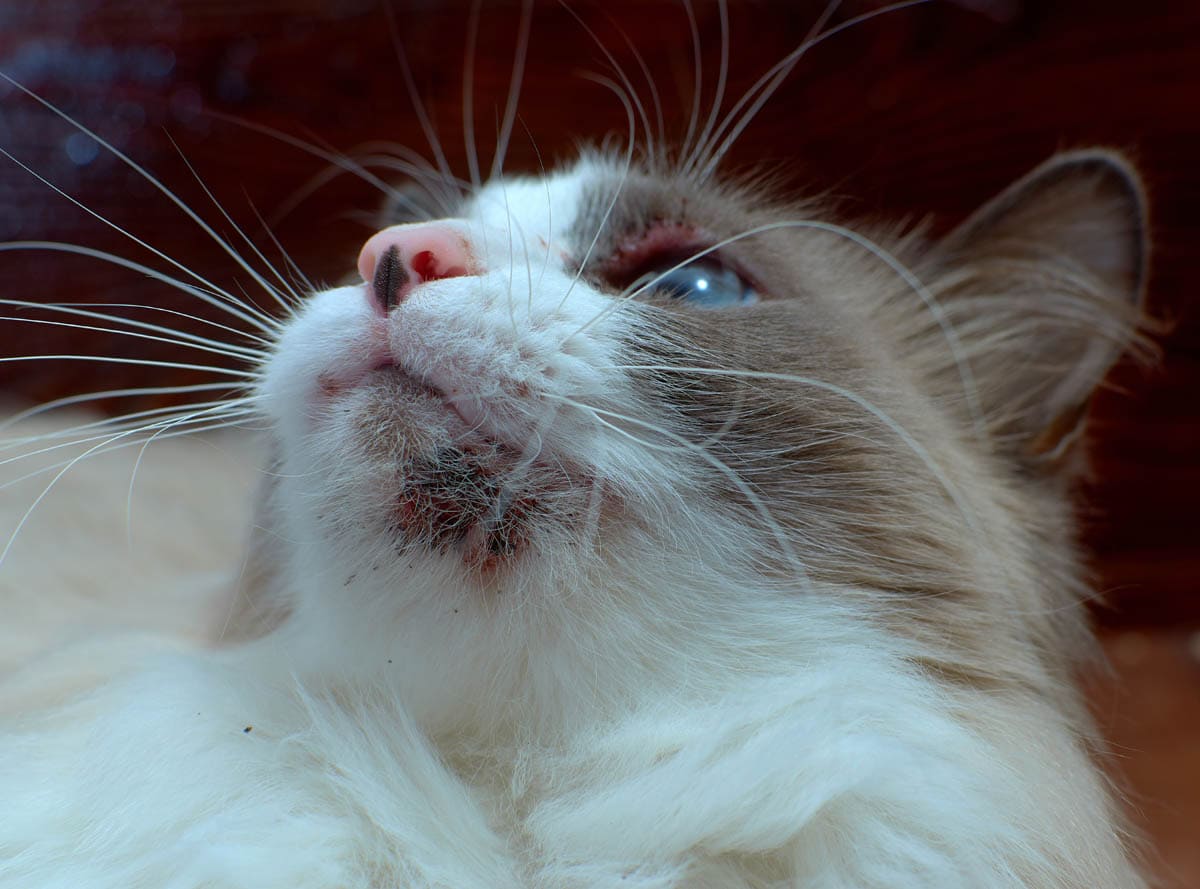
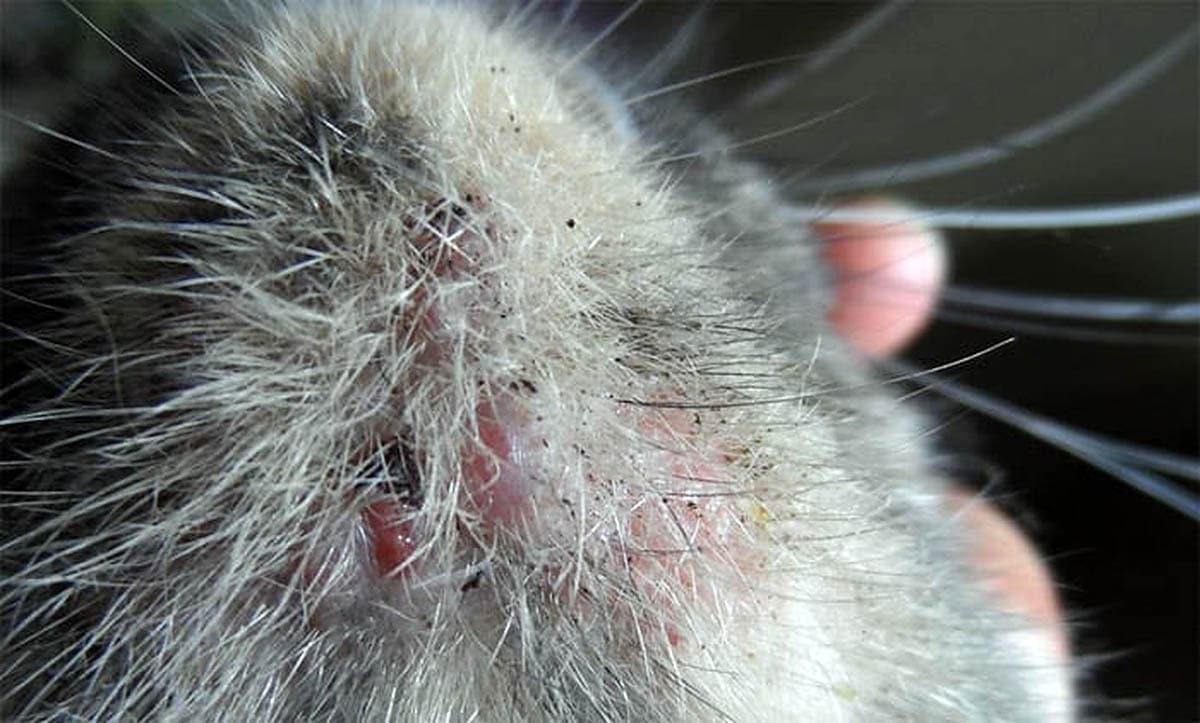
Cats with feline acne develop follicles that become blocked with black sebaceous material on the chin and less often at the margins of the lower and upper lips. Some cats stay in this stage, while other cats develop inflamed and irritated hair follicles which become swollen and infected. Pustules and hyperplasia (enlargement) of the hair follicles develop over time.
Feline acne is more obvious in light coloured cats.
Early:
- Blackheads (comedones) which has the appearance of dirt, hair casts may also be present along the hair shaft.
- Hair loss may also occur.
Moderate to severe:
- Papules, pustules, itching, erythema and swelling develop as the condition progresses.
- Secondary infection can develop in the hair follicles (folliculitis) which may progress to furunculosis, which is a deep infection of the hair follicle characterised by firm, painful nodules and draining lesions. Bacteria which have been isolated include Pasteurella multocida, beta-haemolytic Streptococci and Staphylococci.
- Over time, scarring and keratinisation (thickening of the skin) can occur.
- Loss of appetite may develop in severe cases due to pain.
Diagnosis
The veterinarian will perform a physical examination and obtain a medical history from you. A tentative diagnosis may be possible based on presenting symptoms.
There are several conditions with similar symptoms which your veterinarian will need to rule out, which include eosinophilic granuloma complex, demodicosis (mites), Malassezia (fungi) and ringworm.
Diagnostic workup:
- Skin scrapings: The veterinarian uses a scalpel blade to gently scrape along the surface of the skin to look for the presence of skin mites. It is necessary to do this deep enough to reach mites, which often burrow quite deeply.
- Fungal culture: Skin and hair samples are obtained and sent to a laboratory where they are grown on culture and evaluated daily for the presence of Malassezia.
- Bacterial culture and sensitivity: If bacteria are present, this will allow your veterinarian to determine the most effective antibiotic for treatment.
- Skin cytology: A sample from the affected area is obtained with sticky tape, this is placed onto a glass slide and evaluated under a microscope.
- Biopsy and histopathology: Microscopic examination of a biopsy sample to rule out other conditions, evaluate for neoplasia.
Food elimination trial, flea elimination trial or skin allergy testing if the veterinarian suspects an allergy is a causative factor.
Treatment
Treatment of feline acne depends on the severity of the condition. Products to inhibit the formation of blackheads, remove excess sebum and flush the hair follicles as well as treat secondary infections and eliminate the underlying cause if found.
Home treatment:
If the condition is mild and the cat only has asymptomatic comedones, a watch and see approach is enough.
The veterinarian may clip the hair on the skin or recommend a warm, damp compress before treatment to allow for better penetration of the medication.
| Clean the area | Add diluted chlorhexidine, iodine (Betadine) or witch hazel to a clean gauze and gently wipe the area. |
| Topical antiseborrheic medications | Clean the skin with an ointment or gel containing benzoyl peroxide 2.5 to 5% (such as OxyDex), a broad-spectrum antibacterial product that also has anti-itching properties. Some cats may experience irritation with this product. Salicylic acid is another topical medication that can be used topically; brands include Stridex and Clearasil.
Watch for signs of redness or inflammation when treating your cat with topical products. Consult your veterinarian if your cat does show signs of irritation as they will be able to prescribe a more suitable product, or a varied skin treatment schedule. |
| Omega fatty acids | Omega 3 fatty acids can reduce inflammation in the body (including the skin). It is added to your cat’s food.
Always speak to a veterinarian before adding supplements to a cat’s diet. |
| Feliway | This synthetic pheromone mimics your cat’s facial pheromones and can help to reduce chin rubbing by applying the object to vertical objects as well as induce a feeling of calm in your cat. |
Remember: Never use Dettol as it is extremely toxic to cats.
Veterinary treatment
If the area is red, inflamed, oozing or contains open sores, it will be necessary to see your veterinarian for stronger treatments.
| Topical antibiotic ointment | Administer 2% mupirocin, clindamycin or tetracycline containing products when furuncles (boils) and draining tracts are present. |
| Topical glucocorticoids | To reduce inflammation or oral glucocorticoids such as prednisone for severe inflammation and swelling. |
| Topical antifungals | For cats with Malassezia, commonly prescribed antifungals include miconazole, chlorhexidine and ketoconazole. |
| Oral antifungals | Itraconazole or fluconazole for severe Malassezia. |
| Oral synthetic retinoids | For cats who are unable to tolerate topical treatment or whose acne isn’t responding to the above treatments. These demonstrate anti-keratinization and anti-inflammatory properties. |
Severe cases with deep bacterial infection may require sedation to express comedones and cysts (do not try this at home) followed by a short course of oral glucocorticoids to reduce pain, itchiness and swelling as well as oral antibiotics for six to eight weeks based on culture and sensitivity results.
Treatment may be lifelong for some cats.
Prevention
- Switch from plastic to stainless steel bowls or ceramic as plastic can exacerbate acne.
- Wash food and water bowls in hot soapy water once a day, rinse well and dry.
- If your cat is prone to acne, gently wash the chin with warm water after a meal.
Aftercare
Administer medications as prescribed by your veterinarian. Always finish the entire course of oral antibiotics, even if symptoms have resolved.
Watch for signs of reaction to topical products such as redness, swelling and discomfort. If they develop, seek veterinary advice.
Your veterinarian may recommend ongoing maintenance cleansing even if the acne resolves.
Prognosis
The prognosis is good; however, pet owners must be aware that lifelong symptomatic treatment may be necessary.
FAQ
Is feline acne contagious?
Feline acne is not contagious to people or cats. Human acne is caused by hormone changes, especially during adolescence and pregnancy.
Popping feline acne
Do not pop feline acne, this is not only extremely painful but can spread the infection to other parts of the chin.
How long does feline acne last?
Feline acne may respond to treatment within a short timeframe, for other cats it may be lifelong.
Is apple cider vinegar a reliable treatment for feline acne?
I have been unable to find any credible research to back up the effectiveness of apple cider vinegar to treat feline acne. If you are considering using apple cider vinegar on your cat, speak to your veterinarian first.
Is feline acne dangerous?
In most cases, feline acne isn’t dangerous.
Is feline acne painful?
Mild cases of acne are not painful, but once swelling and inflammation develop, cats can experience discomfort and pain.
Can fleas cause feline acne?
Flea saliva is a common allergen in cats and it is possible flea allergy could trigger feline acne, but unlikely. The most common symptoms of allergies to fleas are itching, scabs around the head (usually near the ears) and neck, and millet-like papules along the back close to the tail.
Does feline acne itch?
Mild cases are typically not itchy, unless they are caused by an allergy, however, moderate to severe cases of feline acne can cause itchiness. One study found 35% of cats with feline had pruritis (itching) as a symptom.
Why does feline acne look like dirt?
The black appearance of blackheads is due to sebum in the pore reacting with oxygen in the air.
Can cat food cause feline acne?
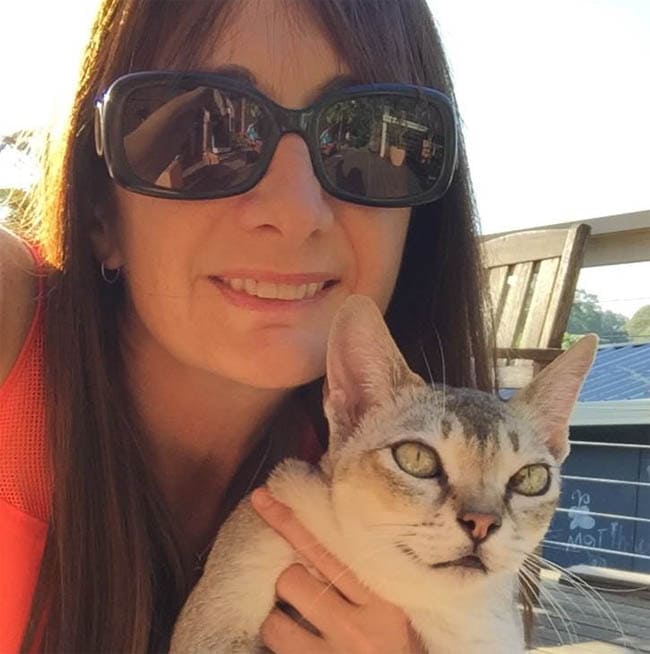
Food allergies may be a cause, from an anecdotal point of view, one of my cats developed moderate feline acne when he was eating a lot of canned food, you can see his acne in the first photo of this article. I suspect he wasn’t able to clean the gravy off his chin. Once we cut back on the canned, his acne improved. In this situation, the problem could have been alleviated by washing the chin after each meal.
Author
-
by
-