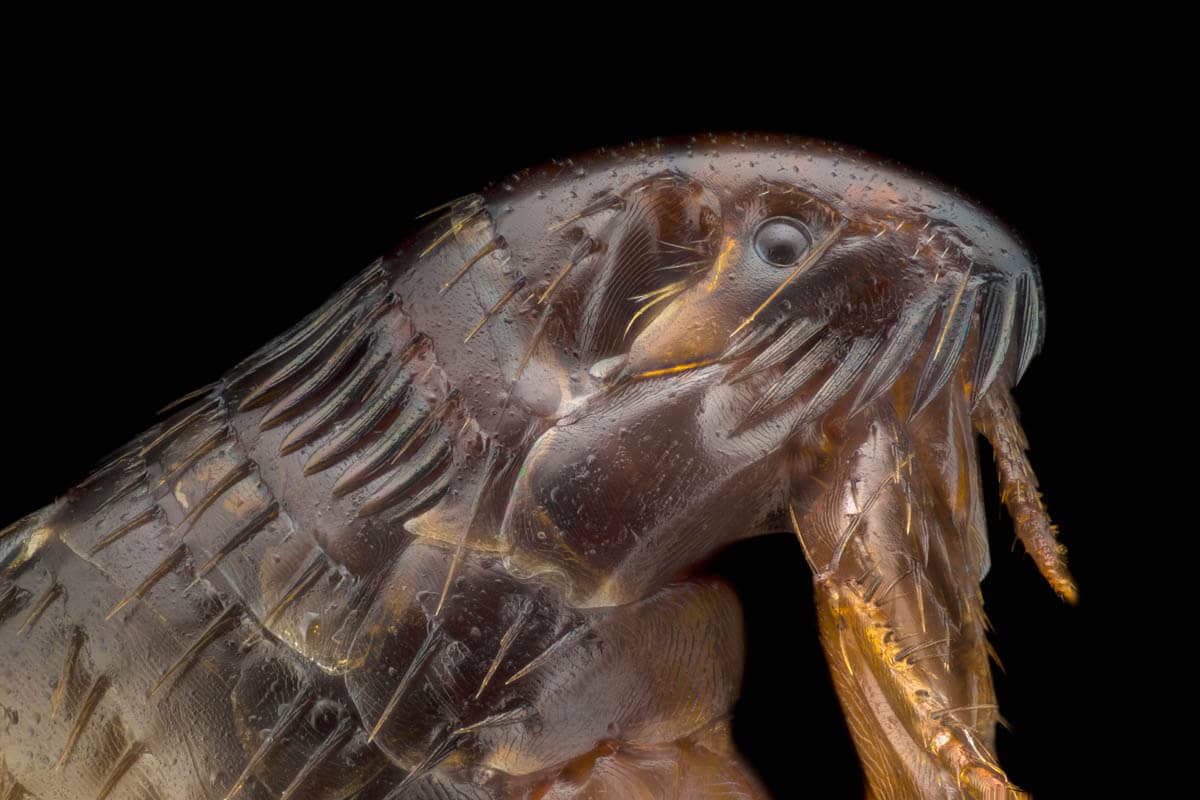
One of the most common parasites to affect cats is the flea. Not only are they a nuisance, but a large number of cats are hypersensitive to flea saliva.
It is only the adult flea who lives on the cat, and they make up approximately 5% of the flea population in the home. The rest of the flea’s life cycle is spent in the environment, so to eliminate fleas, it is important to treat both the cat and the environment at the same time.
Fleas like warmth and humidity and are most prevalent in the warmer months.
Life cycle of the flea:
I won’t go into this in detail as it is covered elsewhere on the site so will be brief. The flea life cycle is in four stages.
- Egg – The adult flea lays up to 30 eggs a day. Eggs are white and oval in appearance and around 1/2mm long. Eggs are laid on your cat but due to their smooth shell, they drop off into the environment.
- Larvae – After several days, the flea larvae emerge from the egg. It is maggot-like in appearance and up to 6mm in length. The larvae are sensitive to light and hide in dark cracks and under furniture close to your pet’s chosen sleeping areas, feeding on adult flea feces and flea eggs.
- Pupae – After 1-3 weeks, the flea larvae pupate, taking up to 10 days to develop into an adult flea, however, they can remain dormant in their protective cocoon for several months.
- Adult flea – The adult flea emerges when stimulated by vibrations, warmth and carbon dioxide and immediately searches for a blood meal. Female fleas cannot lay eggs until 1-2 days after her first blood meal and can consume 15 times its body weight in blood every day, most of which is passed undigested out of the body providing food for flea larvae.
Treat fleas on the cat
There are several flea products available to use on your cat. Your veterinarian is the best person to speak to about flea control. There is anecdotal evidence that some flea products are not as effective as they were due to an increase in flea resistance.
Products come in many forms, including:
Flea collar:
These are not as efficient as other flea control products and their use is generally not recommended for cats.
Flea combs:
These can be used to remove fleas from cats, but as modern-day flea treatments are absorbed into the bloodstream and then poison fleas on your cat, their use is generally limited. They can be useful to remove fleas from newborn kittens who generally can’t be treated with medications for the first few weeks of life.
Flea shampoos and dips:
A variety of flea shampoo and dips are available for use which kills adult fleas on the cat. Disadvantages are that most cats dislike being bathed and modern-day flea treatments which are given orally, by injection or applied to the skin are generally easier to administer.
Spot-on flea products:
These products are typically applied to the skin on the back of the cat’s neck once per month. Fuss-free, quick to apply and effective, these are a great way to treat fleas on cats.
- Frontline Plus – Treats fleas in all life stages and ticks. Note: Frontline plus spray is to be used to treat paralysis ticks on cats and must be applied every three weeks. Can be used on kittens over 8 weeks of age.
- Advantage – Kills adult fleas, larvae, and eggs. Can be used on kittens over 8 weeks of age.
- Advocate – Kills adult fleas on the cat and larvae in the environment. Also kills hookworm, roundworm, lungworm and ear mites. Can be used on kittens over 9 weeks of age.
- Activyl – Treats fleas in all life stages on the cat and in the environment. Can be used on kittens over 8 weeks of age.
- Revolution – Kills adult fleas and prevents flea eggs from matching, prevents heartworm, also kills ear mites, sarcoptic mange, Demodex mite, whipworm, roundworm, and hookworm. This product is for use on kittens over 6 weeks of age.
Tablets:
- Capstar – The medication works by killing adult fleas on your cat. Can be used on kittens who are over 1kg and older than 4 weeks old.
- Comfortis – Kills adult fleas. Can be used on kittens over 14 weeks of age.
Injection:
Program is a 6-month injectable treatment administered by your veterinarian. It works by preventing the eggs from developing into adult fleas.
Side effects of flea products
All medications can potentially cause side effects in cats including foaming at the mouth (if ingested), vomiting, hair loss, contact dermatitis, tremors, seizures, and ataxia. Thankfully these are rare.
Treat fleas in the environment:
- Steam cleaning: Hire a steam cleaner to treat flooring. Steam is an effective way of killing eggs, larvae, and pupae in the environment. Do not steam clean after you have used a fogger.
- Foggers: These products are available from your supermarket or hardware store and contain insect growth regulators to kill fleas and inhibit growth. Remove pets from the home, close all doors and windows. Follow the manufacturer’s instructions.
- Vacuum: After treatment, vacuum your house thoroughly, paying careful attention to nooks and crannies such as skirting boards, under furniture, around your pet’s sleeping areas. Cut up a flea collar into 2-3 pieces and place it in your vacuum cleaner bag or barrel to kill any fleas vacuumed up. Vacuum every day.
- Wash bedding once a week and hang it outside in the sun to dry. Spray bedding with a suitable flea product such as Frontline plus spray.
- Treat outdoor areas too. There are products available to use outside (such as Advantage Yard and Premise Spray) that kill fleas.
Flea product safety
- Always follow the manufacturer’s instructions.
- Don’t mix flea products unless your veterinarian has said it is safe to do so as you may be doubling up on the chemicals used.
- Never use flea products for dogs on your cat as the active ingredients are toxic and can cause death.
- If you have a dog in the home, be careful with the products you use on him as the chemicals can rub off onto your cat if they are nearby (such as sleeping together or sharing bedding). Speak to your veterinarian about which product he advises using on your dog if he is around cats.
- When treating the home, cats should be taken elsewhere for several hours.
- Most foggers are extremely toxic to fish. If you have an aquarium, great care needs to be taken. I would advise speaking to a pest controller and/or your veterinarian to see what the safest method is to treat your home with fish. Recommendations on this fish site are to cover the tank and tape it down with plastic sheeting or a tarpaulin and turn off the pump.
Author
-
by
-