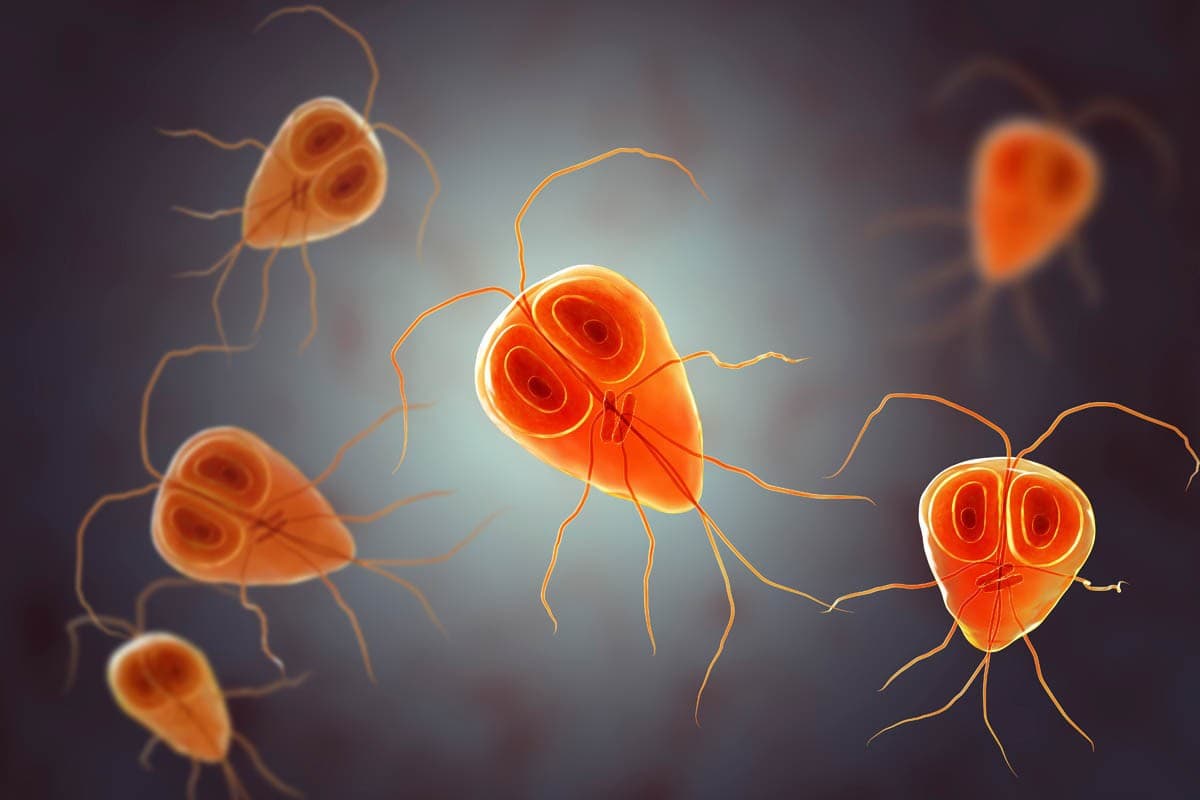
Giardia at a glance
|
About
Giardiasis is an intestinal infection caused by the protozoan parasite Giardia duodenalis. G. duodenalis can infect a wide range of mammals, including humans, and is split into several assemblages (subpopulations) which have a preferred host.
- A1 – Humans and a wide range of mammals including cats and dogs
- A2 – Humans
- A3 – Hoofed wild animals
- B – Wide range of mammals, including humans and cats
- C – Dogs and other canids
- D – Dogs and other canids
- E – Hoofed animals
- F – Cats
- G – Rodents
One study in Australia found the prevalence of giardia in healthy cats to be 2%, although those numbers may be up to 12% in crowded conditions such as shelters and catteries. Infection in kittens and young adults are most common as well as cats in over-crowded or stressful environments and immunocompromised cats.
The geographical distribution of giardia is worldwide and is a common cause of diarrhea in travellers.
Transmission
Transmission of giardia is via the fecal-oral route. The feces of an infected animal contain large numbers of infective giardia cysts which can contaminate the environment and waterways in several ways:
- Drinking water: Contaminated water is one of the most common modes of transmission.
- Fur: If the cat’s fur or paws come into contact with infected feces in the environment, such as digging in a litter tray or a garden bed and then licks his coat.
- Food: If the cat consumes food that contains infective cysts. Contamination can occur during preparation from a person who has cysts on their hands or contaminated equipment.
- Fomites: If the cat comes into contact with contaminated objects which can be transferred to the cat’s coat and later ingested when the cat grooms.
The live cycle occurs in two stages; the fragile trophozoites found in the small intestine and hard cysts that are shed in the environment via the feces. Cysts can survive up to seven months, especially in damp environments.
- Trophozoites are the active motile (swimming) form, and it is at this stage that it lives in the intestines feeding and reproducing. The trophozoites have flagella, which are long hair-like structures that enable the protozoa to move around. During the feeding stage, the parasite replicates in the small intestine by binary fission (this is the asexual reproductive process where one cell divides into two cells).
- The trophozoites move towards the colon where they produce a cyst wall. The trophozoite within the cyst divides once, and this mature cyst now contains two trophozoites. This cyst is carried away by the passing fecal stream and leaves the body in the feces. [1] It can take as little as three days post-infection for cysts to appear in the feces. Cysts are extremely hardy and can survive for several months in cool, moist environments.
Symptoms
The incubation period of giardia is 1-14 days. Most cats are asymptomatic but may still shed cysts in their feces.
Clinical signs occur most often in younger animals from multi-cat households/environments or immunocompromised cats.
If large numbers of trophozoites develop, the cat will develop symptoms which include:
- Foul-smelling, often yellowish, foamy/frothy and greasy feces which may contain specks of blood and mucus from damaged intestinal walls
- Abdominal pain
- Vomiting (occasionally)
- Flatulence
- Weight loss
Diarrhea may be self-limiting; however, in cats with prolonged diarrhea, dehydration and lethargy can develop due to loss of fluids.
Diagnosis
Fecal flotation (zinc sulfate solution): To detect cysts. Cysts may not be present in the stool of a cat with diarrhea.
Fecal smears: To detect the active trophozoites. These are more likely to be seen moving around in watery stools and cysts are more common in firm stools. A negative sample doesn’t necessarily rule out giardiasis. Three stool samples should be studied over a period of 7 – 10 days before a definite diagnosis is made.
SNAP test: IDEXX Laboratories have a SNAP Giardia test kit which is available for in-house testing. The sensitivity of this test is 90%.
Treatment
Several medications may be used to treat clinically affected cats; however, no drugs been approved for the treatment of giardia in cats in the USA.
Flagyl (Metronidazole)
This medication also has the benefit of having anti-inflammatory properties. Do not use in pregnant cats as Flagyl is suspected of being teratogenic (can increase congenital abnormalities). Side effects may include loss of appetite and hypersalivation, presumably due to the bitter taste of this medication.
Dosage:
15-25mg/kg
Drontal Plus, Panacur (Fenbendazole)
An anthelmintic (anti-parasitic drug to kill worms), may be used particularly if concurrent infection with parasitic worms is suspected. Metronidazole and Fenbendazole may be used in conjunction with each other.
Dosage:
50mg/kg
Furoxone (Furazolidone)
Antibiotic and antiprotozoal medication. Furoxone can cause vomiting and diarrhea and should not be used in pregnant cats.
Dosage:
4mg/kg twice daily
Supportive care
Fluids to treat dehydration and nutritional support. Try to encourage water intake to replace lost fluids. If your cat is not drinking, your veterinarian may recommend Pedialyte, which can help replace lost fluids and electrolytes.
Feed a bland diet to rest the cat’s gastrointestinal tract.
Cats with subclinical infection usually won’t require treatment.
Disinfection
Giardia can remain active in the environment for up to seven weeks. The following disinfectants are effective.
- Bleach (sodium hypochlorite, calcium hypochlorite or sodium dichloroisocyanurate)
- Trifectant or Virkon-Potassium peroxomonosulfate
- Virox, Accel – Accelerated hydrogen peroxide
Can I catch giardia from my cat?
This answer is still not entirely known, so it is safe to err on the side of caution and assume transmission of giardiasis from cats to humans is possible.
As you can see from the assemblages, cats can be infected with A1 or F, whereas humans are infected with A1, A2 and B. So it is feasible that if your cat has become infected with A1, transmission is possible. It is unlikely that a cat infected with F could pass it on. Regardless, it is always better to play safe and assume infection is a possibility and take appropriate safeguards when dealing with an infected cat.
Preventing reinfection
The reinfection rate of giardia is extremely high; it is important to take steps to not only treat the cat but decontaminate the environment and practice safe hygiene during an outbreak.
- Disinfecting the environment: Use a 1:16 bleach solution. Remove organic material first, which deactivates bleach. Apply to the area and leave for 10 minutes. Rinse the area with plain hot water.
- Isolate infected cats while they are sick. Before re-introducing them to other pets, bathe to remove any cysts which may be on their coat.
- Wash food and water bowls daily: Use hot, soapy water. Use a disposable sponge or cloth when doing so. Allow to dry fully.
- Remove feces from litter trays as quickly as possible: Place in a bag in the bin.
- ALWAYS wash your hands after handling infected animals or their objects (litter trays, food bowls).
- Try to keep cats indoors if possible. If your cat goes outside, be aware that the environment can remain contaminated under the right conditions for several months. It is not possible to disinfect gardens, so try to stop cats or people digging in possibly contaminated areas.
- Treat all cats concurrently: If re-infection in multi cats households is occurring.
- Litter trays: Empty and regularly disinfect, especially during an outbreak. Allow to air dry in the sun for 30 minutes if possible. If not, add boiling water, swish and then dry with paper towels.
Author
-
by
-