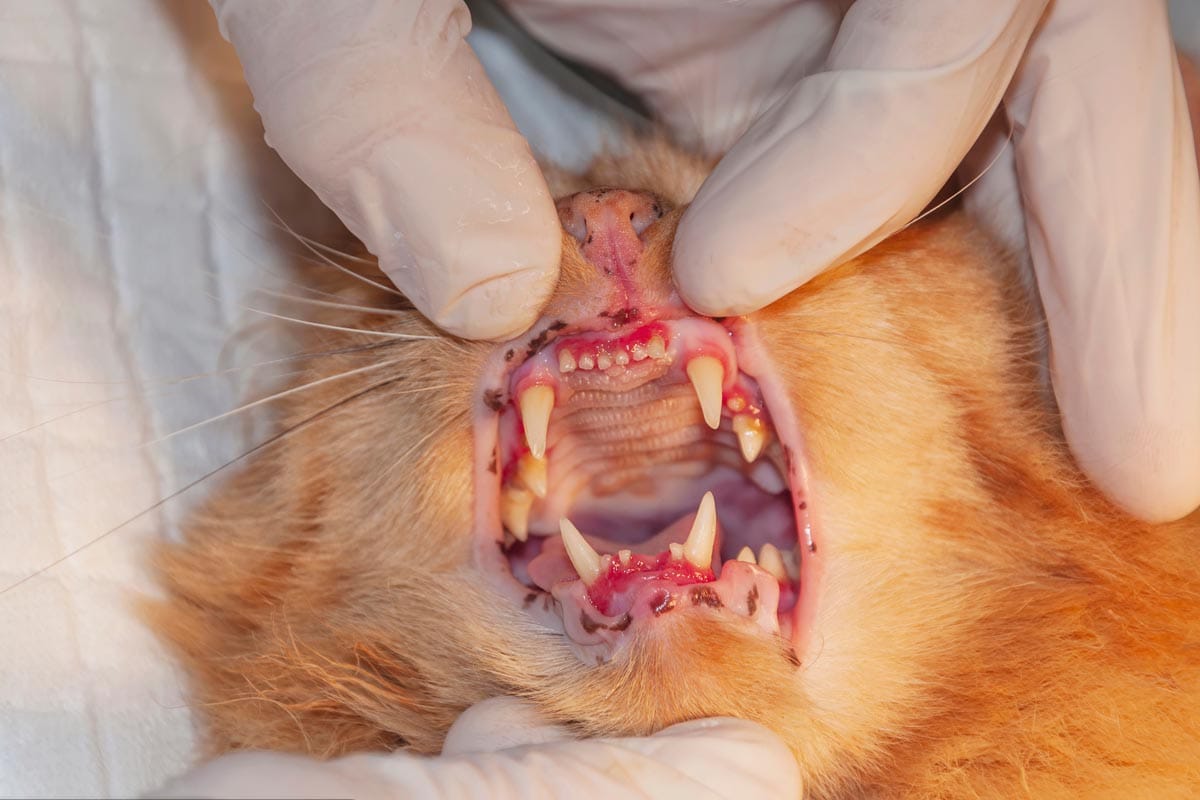
What is stomatitis?
Also known as lymphocytic-plasmacytic gingivitis-stomatitis-pharyngitis (GSPC), stomatitis is a painful disease characterised by chronic inflammation and ulceration of the soft tissues in the mouth.
There is no definitive cause, but it is believed to be multifactorial with an immune-mediated component, possibly representing a hypersensitivity to oral bacterial antigens. [1] One study revealed that 88% of cats with stomatitis were shedding both herpesvirus and calicivirus. Other possible factors include oral irritants, immunodeficiency diseases, metabolic diseases and drug reactions.
Symptoms
Signs of stomatitis depend on the severity of the lesions. Naturally, it can cause severe pain in the affected cat. Stomatitis most commonly begins in the fauces, which is the area in the back of the mouth where the lower jaw meets the upper jaw which becomes red, swollen and ulcerated. Other symptoms include:
- Anorexia (loss of appetite)
- Weight loss
- Bad breath
- Difficulty eating
- Excessive salivation (drooling)
- Gums that bleed easily
- Pawing at the face
- Reluctance to groom
As the disease progresses, ulceration and bleeding develop in the mouth.
Diagnosis
The veterinarian will perform a complete physical and oral exam and obtain a medical history from you.
Diagnostic workup:
- Oral biopsy: A biopsy may be performed to determine if the lesions are caused by other diseases such as neoplasia (cancer) or eosinophilic granuloma complex. Biopsy should reveal a dense infiltration of lymphocytes and plasma cells.
- FIV and FeLV serum tests: Retroviral infections can lead to inflammatory oral disease.
- Biochemical profile: To rule out other conditions which may have a similar appearance to stomatitis. Typical findings include an elevation in white blood cells.
- Dental x-rays: To check the condition of the dental roots and bones. Stomatitis often affects the molars and pre-molars more than the canines and incisors.
Treatment
Stomatitis is very difficult to cure and the response to many treatments are poor. Address the cause, if one has been established.
- Professional cleaning of the teeth under anaesthesia as periodontal disease can cause or at least contribute to stomatitis. After the cleaning, the gums and the teeth are washed with chlorhexidine.
- Long term, systemic antibiotic therapy. Common choices include amoxicillin/clavulanic acid, doxycycline, metronidazole, and clindamycin.
- Corticosteroids to increase appetite and reduce oral inflammation. Options include sub-muscular injection, transdermal patches and tablets. The latter can be problematic due to oral pain.
- Cats unresponsive to treatment may require extraction of all teeth behind the canines to provide long-term relief which sounds extreme, but cats get along just fine without these teeth with the assistance of a softer diet.
Frequently asked questions
Is stomatitis in cats contagious to humans? Stomatitis in cats is not contagious to humans.
How long can a cat live with stomatitis? With appropriate medical care, most cats can live for many years?
Should a cat with stomatitis be euthanised? There is no reason for a cat to be euthanised if there are medical options to treat the disease.
What should I feed my cat with stomatitis? Cats with stomatitis should eat a soft diet of canned food or dry food moistened with water.
Can I treat my cat with stomatitis at home? No, a cat with stomatitis requires veterinary care.
References:
1: The Feline Patient – Gary D. Norsworthy, Mitchell A. Crystal, Sharon K. Fooshee and Larry P. Tilley.
Author
-
by
-