About
Just like humans, cats can get sunburn too. Over time the damage caused can increase the risk of developing squamous cell carcinoma which is a form of skin cancer.
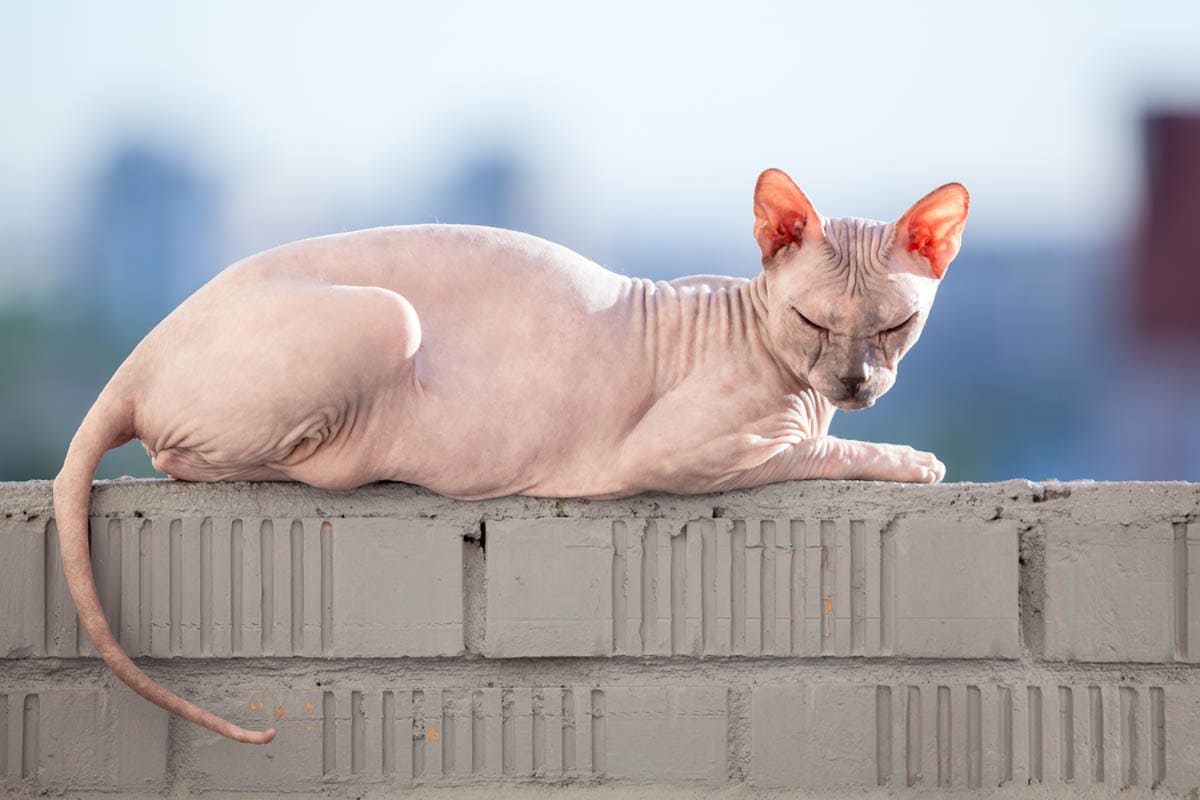
White and light-coloured cats, cats with white or light coloured ears, noses and breeds with thin coats such as Devon Rex, Cornish Rex and Sphynx cats are most susceptible to sunburn. This is because of the lack of melanin (skin and hair pigment), and protective hair in these areas. The ears are most commonly affected, although eyelids and noses can also develop sunburn. Outdoor cats, especially those who spend a lot of time outside are also at greater risk.
Solar dermatitis (also known as actinic dermatitis) is a common disorder in areas with warm, sunny climates.
Symptoms
Many pet owners don’t realise their cat has sunburn or solar dermatitis and mistake them for other skin disorders such as allergies. Just as with other burns, sunburn can be graded according to the severity of the burn.
- First-degree (superficial partial thickness): The top layer (epidermis) of skin is affected, there may be some mild redness of the skin, but shouldn’t be any loss of hair.
- Second-degree (deep partial thickness): The top (epidermis) and deeper layers of skin (dermis) are affected and the skin is red and painful. There may be some hair loss along the margins of the ears. There may also be swelling and a great deal of pain.
- Third-degree (full thickness): The burns have extended to all layers of skin and possibly the underlying tissue. Hair loss has occurred and the affected area may be white. There will be no pain if the nerves have been destroyed.
Solar dermatitis:
Prolonged sun exposure can lead to chronic damage to the skin, dermatitis becomes progressively worse each summer until persistent ulceration and squamous cell carcinoma can eventually develop. Symptoms include:
- Scaling, thickening of the skin around the ears
- Itchiness may cause your cat to shake his head and scratch at the affected area causing bleeding and possibly infection
Squamous cell carcinoma:
- Crusting lesion which progresses to an ulcer which doesn’t heal
- Redness, irritation and hair loss around the affected area
Keep in mind that a cat with sunburn may also have heatstroke. Symptoms of heatstroke can include panting, bright red gums, drooling, weakness, anxiety, bleeding and collapse.
Diagnosis
Sunburn can usually be diagnosed during the physical examination of the burned tissue. If an infection is present a sample may be taken and cultured to determine the type of bacteria present so that the best antibiotic can be prescribed.
There are a number of conditions that produce similar symptoms to solar dermatitis, so your veterinarian may need to perform some tests to come up with a definitive diagnosis.
Skin biopsy and histopathology to evaluate the cells and look for other possible causes such as mites.
Treatment
Seek veterinary attention immediately if you think your cat has sunburn. Sunburn is exactly that, a burn to the skin and it is extremely painful. Treatment depends on the severity of the burn.
Superficial (first degree) sunburn
- The area will be clipped and a topical antiseptic applied.
Deep or full-thickness (second or third degree) sunburn
- Topical antiseptic applied to the affected area.
- Antibiotics to treat bacterial infections.
- Topical or oral steroids if the sunburn is severe.
- Intravenous fluids may be necessary as severe burns often result in fluid loss.
- Analgesics to relieve pain.
Prevention
How to keep cats cool on hot days:
|
Author
-
by
-