
Tapeworms at a glance
|
What are tapeworms?
Also known as cestodes, tapeworms are flat, segmented worms that live in the small intestine of cats and other mammals.
Tapeworms have no mouth or digestive tract themselves and must obtain their food source pre-digested, they have a tough outer skin that is capable of withstanding the strong digestive juices. Tapeworms absorb the cat’s pre-digested food through their porous skin.
There are approximately 5,000 species of tapeworm in the world, each of which has a specific host, only a small number of tapeworms infect cats.
The two most common tapeworms found in cats are dipylidium caninum (pronounced dipey-lideum) and taenia taeniaeformis (pronounced teenea-teeneaformis). The distribution of both dipylidium caninum and taenia taeniaeformis is worldwide. Both species live in the cat for up to three years.
What do tapeworms look like?
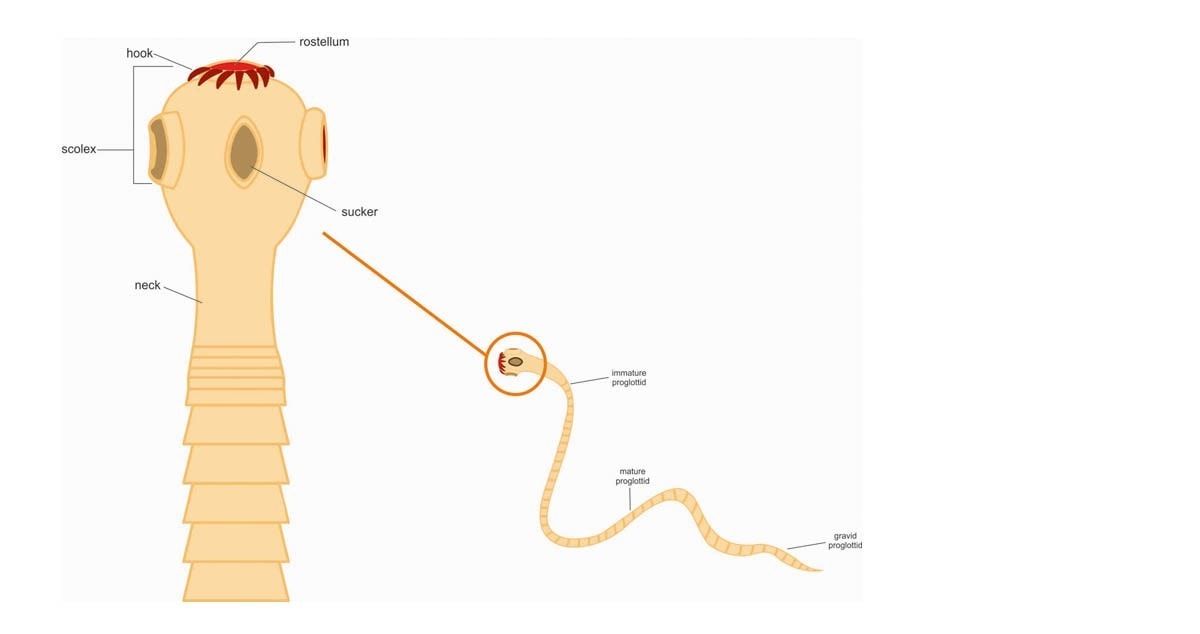
Tapeworms are white/cream in colour with a ribbon-like appearance. They can grow up to 24 inches (60 cm) in length and are the second most common type of worm to infect cats (roundworms are the most common).
Tapeworms are hermaphroditic, which means they contain both ovaries and testes and are capable of reproducing on their own. They have a head (scolex), a neck and a segmented body (the segments are known as proglottids and collectively strobila). The head attaches to the wall of the small intestine with hooks and once attached to the intestinal wall; the tapeworm begins to produce proglottids.
Each proglottid has its own digestive tract, male and female reproductive organs and is classified as immature, mature and gravid. Located at the end of the strobila, the gravid proglottid contains a fully mature uterus full of eggs. As the tapeworm matures the intestine, the proglottids at the end of the tapeworm break off and pass into the stool.
Transmission and life cycle
The tapeworm needs two hosts to complete its lifecycle. First is the intermediate host (the flea or a rodent), and the final host (your cat), where the larvae develop into an adult tapeworm.
Dipylidium caninum:
Flea larvae consume eggs in the environment, where they continue to develop inside the flea. Cats can accidentally ingest an infected flea when they groom. Once inside the cat, the flea is broken down and the tapeworm is released.
Taenia taeniaformis:
Rodents ingest tapeworm eggs in the environment where they pass through several life stages before migrating to the liver. Once in the liver, each scolex (head) forms a fluid-filled cyst (strobilaceous). The parasite can survive for several months inside the rodent. If the infected rodent is eaten by a cat, the strobilaceous survives and develops into an adult tapeworm.
Cats become infected when they ingest a flea (during grooming) or rodent which contains tapeworm larvae.
Symptoms
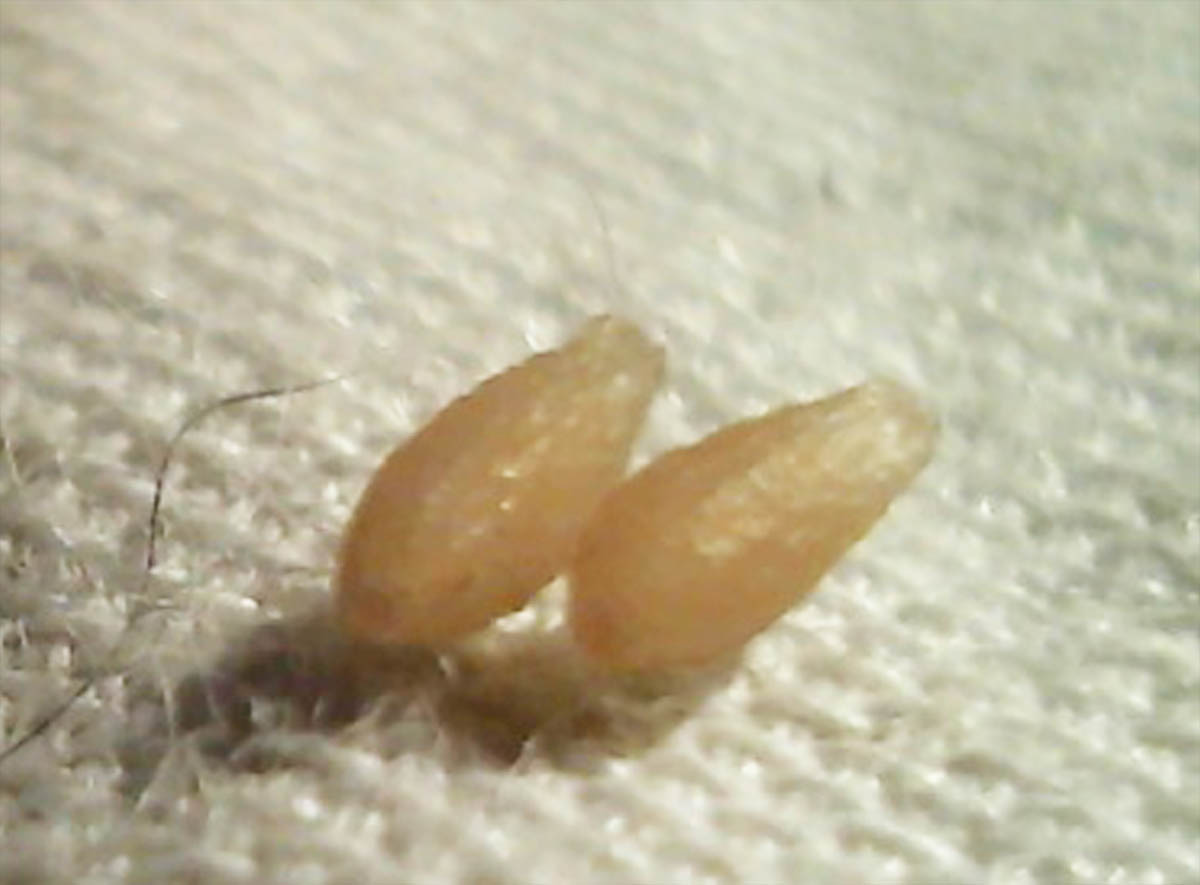
Most tapeworm infections in cats are asymptomatic, and cat owners only become aware of infection when they notice rice-like segments (proglottids) around the cat’s anus, the fur around the tail, in the feces and the environment, such as bedding.
Accompanying symptoms:
- Proglottids can cause anal itching, and the cat may scoot his or her anus across the floor.
- Once outside the body, the proglottid dries out, revealing the eggs, which look like sesame seeds.
- Weight loss.
- Some tapeworms release their attachment to the small intestinal wall and move to the stomach; the cat may then vomit it back up.
Heavy infestations may produce symptoms, which include:
- Biting or licking their anal area or scooting their hindquarters along the floor.
- The fur may also take on a poor appearance.
- Weight loss due to the tapeworm competing for nutrients with the cat.
- Vomiting – The tapeworm can detach from the small intestine which the cat vomits back up.
Diagnosis

The veterinarian will perform a physical examination of your cat and may notice tapeworm segments around the anus or in the feces.
The presence of proglottids or tapeworm eggs in a fecal flotation can confirm the diagnosis.
Are tapeworms dangerous to cats?
Generally, tapeworms aren’t harmful to cats; however, as tapeworms take nutrients from the cat, a heavy infestation can cause your cat to become nutritionally deprived and lose weight.
There has been one published case of a barn cat who developed an intestinal obstruction due to tapeworm infection.
Treatment
There are many effective tapeworm treatment options available, which are available in tablet, paste and topical formulations.
| Drontal (Praziquantel and Pyrantel) | Treats: Tapeworm, roundworm, and hookworm.
Kittens and lactating females: 6 weeks old and can use on pregnant and lactating females. |
| Milbemax (Praziquantel and Oxime) | Treats: Roundworm, hookworm, and tapeworm.
Kittens and lactating females: 6 weeks and over 500g and can use on pregnant and lactating females. |
| ParaGard (Praziquantel, Oxibendazole) | Treats: Tapeworm, roundworm, and hookworm.
Kittens and lactating females: 2 weeks old. There are no studies for pregnant or lactating females. |
| Popantel (Praziquantel) | Treats: Tapeworm, roundworm, hookworm, and whipworm.
Kittens and lactating females: Can use on pregnant and lactating cats and kittens over 6 weeks. |
| Panacur (Fenbendazole) | Treats: Tapeworm (Taenia taeniaeformis species), roundworm, hookworm, whipworm, lungworm, and giardia. Does not treat Dipylidium caninum tapeworm.
Kittens and lactating females: Kittens over 2 weeks and can use on pregnant and lactating females. |
| Profender (Praziquantel and Emodepside) | Treats: Roundworm, hookworm, tapeworm, and lungworm.
Kittens and lactating females: 8 weeks and over 500g and can use on pregnant and lactating cats. |
| Purina Total Care (Pyrantel embolate and Niclosamide) | Treats: Roundworm, hookworm, and tapeworm.
Kittens and lactating females: 6 weeks old and can use on pregnant and lactating cats. |
It is also important to treat both the cat and the environment for fleas at the same time.
Cleaning the house after cat worms
Always wear rubber gloves when cleaning to reduce the risk of transmission.
Tapeworm eggs can survive a long time in the environment and are resistant to chemical disinfectants. The most effective way to clean after a worm infestation is to steam clean all hard surfaces.
Wash the cat’s bedding in hot water and steam clean or tumble dry.
Empty all cat litter trays and scrub with hot water and detergent. Fill with boiling water and allow to sit for ten minutes.
Can I catch tapeworms from my cat?
Yes and no. You cannot catch tapeworms directly from your cat, but if your cat has fleas, it is possible to catch tapeworm by accidentally swallowing a flea carrying the tapeworm cysticercoid. Humans are most likely to become infected with tapeworms from eating undercooked meat.
Pinworms are the most common parasitic worm to infect humans and transmission occurs from human/human and via objects such as bedding, cats do not spread these worms.
Prevention
Diligent flea control is essential; if you treat the cat for tapeworm but don’t address the problem of fleas, re-infection will occur. Remember that most of the flea life cycle is spent in the environment and not on the cat, you must treat the house and outdoors for fleas at the same time as you treat the cat.
Prevent hunting by keeping them indoors or in a cat enclosure.
Treat cats regularly for fleas and worms, below is the schedule for worming kittens and cats:
- Every 2 weeks from 2 weeks of age until the kitten is 12 weeks old.
- Monthly from 12 weeks of age until 6 months.
- Every three months from 6 months.
*Some worming treatment schedules may vary, always follow the instructions on the pack.
Frequently asked questions
How long does it take to kill tapeworms in cats?
Most tapeworm medications kill the adult tapeworm(s) within 24 hours.
How serious is tapeworm?
Tapeworms can rob the cat of nutrients, and cause weight loss, particularly in kittens. There has been one report of intestinal obstruction in a barn cat with a heavy burden of adult tapeworms.
How to kill tapeworms without going to a veterinarian:
Most pet stores sell tapeworm medications over the counter, although it is always safer to see a veterinarian who knows your cat’s history, it is possible to treat without seeing a veterinarian.
How long can tapeworm live in the environment?
There is no data on the longevity of dipylidium caninum eggs in the environment, however, Taenia spp. eggs have been found to survive up to one year.
Author
-
by
-