Home          Site Map


Paralysis Ticks in Cats

Your Lifestyle: Home, Parenting, Gardening, Pets, Food, Money & More!!!

What are ticks?

Ticks  are bloodsucking ectoparasites.

What is an Ectoparasite?

An ectoparasite is a parasite that lives on the exterior of an animal. 

Are there different types of ticks?

Yes, there are hundreds of species of ticks worldwide. Australia has around 70 species of ticks.

What type of ticks affect cats in Australia?

Paralysis Ticks (Ixodes holocyclus).

Where do they ticks live?

The paralysis tick lives on the east coast of Australia from North Queensland to Northern Victoria. 

When are ticks most prevalent?

In northern parts of Australia, ticks can be found all year. In the cooler southern areas, tick season is generally from spring  through to late autumn.

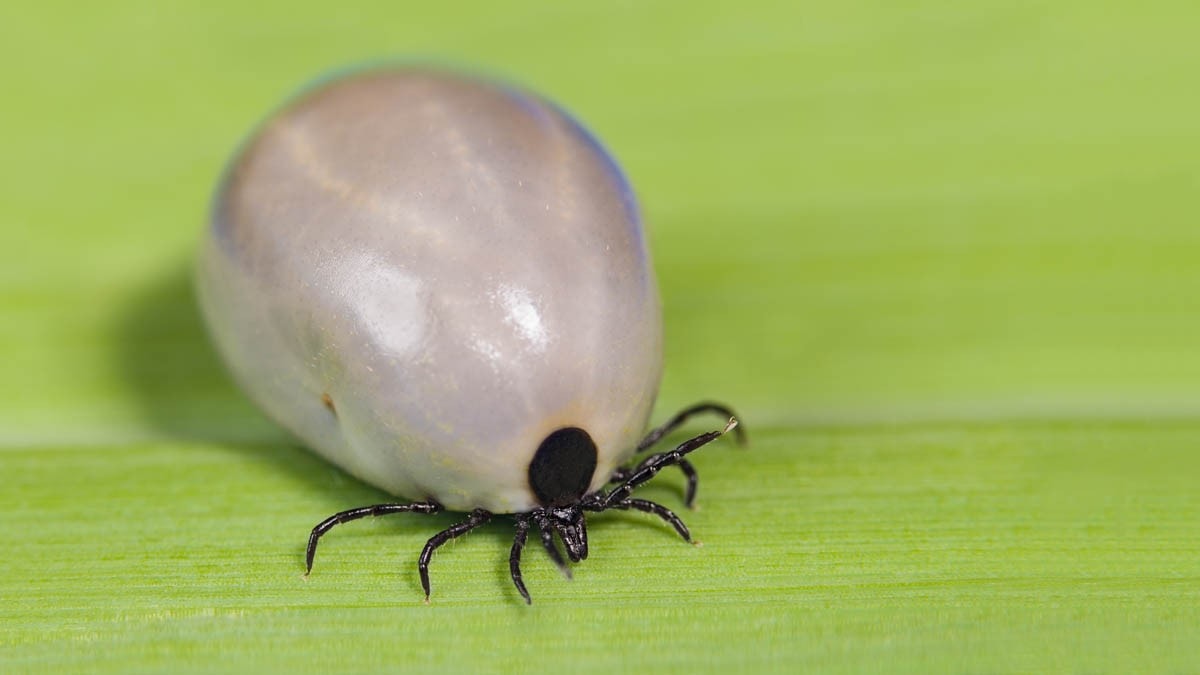
What do paralysis ticks look like?

(click to enlarge)

Tick.jpg (12487 bytes)

Tick1.jpg (15421 bytes)

Tick2.jpg (6830 bytes)

Tick Mouth Parts

Life Cycle of the Paralysis Tick

Ticks have 4 stages of life... 

1) Egg

2) Larva (6 legged)

3) Nymph (8 legged)

4) Adult (8 legged)

What do Paralysis Ticks do?

The tick attaches to the cat & borrows it's mouthparts into the skin. It sucks the blood & injects a neurotoxin called Holocyclotoxin, which causes paralysis.  It is usually the female tick who attaches to animals, the male actually parasitises the female tick. The tick is fairly small when it attaches to it's host, growing in size as it consumes more blood. Illness doesn't occur quickly, as it does with animals such as snakes & spiders, it can take hours or even days before symptoms of poisoning become apparent. That's not to say that ticks aren't as deadly as other poisonous animals & it is advisable you take your cat to a veterinarian, just to be on the safe side.  

What is a Neurotoxin & What does Holocyclotoxin do?

A neurotoxin is a toxic substance which damages or destroys the cells of the central nervous system. * Holocyclotoxin is a neurotoxin which is  excreted from the tick's salivary glands into the cat. Holocyclotoxin inhibits release of acetylcholine in neurons. 

* Other examples of neurotoxins  are: 

Botulinum toxin from bacteria, this blocks acetylcholine release. 

Apamin from the honey bee, which blocks potassium channels. 

Versutoxin from the funnel web spider, which opens sodium channels. 

How do Paralysis Ticks get onto cats? 

Stimuli such as heat & movement alert the tick to a potential host. They climb onto vegetation & when an animal passes, it waves it's forelegs (known as questing) until it makes contact with the host.

What are the signs of tick poisoning in cats?

Symptoms of tick paralysis include;

  • Loss of appetite

  • Vomiting or dry retching,  excessive salivation, difficulty swallowing, difficulty breathing, coughing.

  • Change to meow.

  • Coughing.

  • Noisy panting.

  • Difficulty swallowing.

As symptoms progress you may notice;

  • Limb weakness, starting in the hind legs, progressing to the front legs, appearing wobbly & uncoordinated, falling over, paralysis.

  • Incontinence.

  • Laboured breathing.

  • Coma.

I was at a cat seminar a few years ago & one of the vets there mentioned a couple of interesting warning signs. He said that a cat's pupils will dilate & it can sometimes lose it's ability to meow when it's been poisoned by a tick. The large pupils & inability to meow can show up days before more obvious symptoms of poisoning become apparent. 

What to do if your cat has been poisoned by a tick?

Try to keep yourself & your cat as calm as possible. Remove food & water as poisoning can prevent the cat from swallowing properly, which in turn could lead to choking. Take it to the veterinarian as soon as possible. The longer you delay taking your cat to a vet, the worse the symptoms will become, which may lead to death. 

How do you prevent tick poisoning?

Check your pet thoroughly every day for ticks. Start from the tip of the nose & work your way right down to the tail. Ensure you check between the toes, inside the ears (be careful).

Avoid allowing your cat to wander in the native bushland. However, ticks aren't found exclusively in native bushland. 

Regularly use insecticides such as the ones listed below if your cat goes outside. 

What products can you use to prevent ticks?

Frontline Plus Top Spot,  Frontline Spray, Fidos Fre-Itch Rinse Concentrate, Proban Tablets or Oral Liquid.
 

What treatment will be performed on a cat who has been poisoned by a tick?

Your pet will almost certainly be hospitalised. It  will be given antiserum. Treatment depends on the severity of the symptoms, and is different from case to case. The greater the severity, the more care the animal will need & mortality rate increases, which is why it's so important to seek veterinary care as soon as you suspect tick poisoning. Symptoms may include pneumonia, high blood pressure, heart problems, vomiting & respiratory difficulties. 

If it is having difficulty breathing, it may be given oxygen. It may also be put on a drip to prevent dehydration.

Recovery is dependent upon severity of symptoms. Generally veterinary treatment takes 2+ days. You will be required to care for your cat for some time after it has been discharged from the hospital also. 

What is antiserum?

Antiserum is a serum that contains antibodies obtained from dogs which have been made hyperimmune via repeated exposure to paralysis ticks. 

How does it work?

Antibodies in the serum, which are produced by the white blood cells work to neutralise or destroy the toxins produced by the tick. 

Do Paralysis Ticks affect other animals?

Yes, ticks affect native animals too. Including marsupials, reptiles,  birds & dogs. The Bandicoot is a particular favourite. 

What is Lyme disease?

Lyme disease is the Borrelia burgdorferi bacteria which is transmitted via tick bites. 

Does Lyme disease affect cats?

Yes, although it has yet to be proven that the Paralysis Tick passes on Lyme disease to cats in Australia. Lyme disease is passed on via the Deer Tick, also known as the Black Legged tick (Ixodes scapularis) in North America. You cannot catch Lyme disease from your pet, but it is possible for humans to become infected from ticks. 

What is Queensland Tick Typhus (Rickettsia australis)?

Tick Typhus is a bacterial infection caused by the Paralysis Tick. 

Can Queensland Tick Typhus affect cats?

In my research, it doesn't appear to do so, however it does affect humans, again the mode of transmission is via the tick. 

Is there a tick vaccine?

No, not currently although the University of Technology, Sydney are working on a tick toxin vaccine.  

Can ticks affect humans?

Yes they can. Most tick bites cause few problems to people, however there is a serious danger if the person has a severe allergic reaction to the tick bite or is paralysed by the toxins. Humans can also catch diseases such as Queensland Tick Typhus from ticks. 

How do you remove a tick?

It is recommended you wear a pair of latex gloves while removing a tick. Using tweezers or a tick remover (you can purchase these for a few dollars from your veterinarian)  firmly grasp the tick's head, as close to the cat's skin as possible. Be extremely careful not to squeeze the body of the tick as this will inject more poison & pathogens into the cat's system. You can also kill the tick while it's still on the cat by using an appropriate insecticide, such as Frontline spray. 

Disposing of Ticks

Once removed, save the tick by placing it in a jar of methylated spirit or alcohol so you can take it to your veterinarian for identification. 

* References

* photos courtesy of Norbert Fischer; BVSc MACVSc

(Norbert's page seems to have moved, so I am now linking to Tick Alert, which Norbert appears to be a part of. This is an incredibly informative site.

Neurotoxin Info courtesy of Neuroscience for Kids

Neurotoxin Info courtesy of Washington State University at Vancouver


Cat-World cat forums
Join our online cat community with over 8,868 members for advice and friendship.
We also have classified forums for breeders to list cats for sale.

You must be registered to login. Register here.

 
Your Lifestyle: Home, parenting, gardening, recipes & more!
Visit our new home & lifestyle forum. Click here.


Check out our extensive listing of Australian & international cat breeders.


Unless otherwise stated, all articles on this site are written by myself & are the sole property of Cat-World.
No part of this website may be copied unless you have written permission to do so.

Copyright © 2002 - 2008  Cat-World.  All rights reserved.
Disclaimer       Privacy Policy       Site Map      Contact Cat-World      Advertise on Cat-World       Goods & Services Directory       Your Lifestyle